Srbija
 Hrvatska
 Slovenija

Aida Cerkez’s Srebrenica story: How one survivor’s testimony revealed the genocide to the world


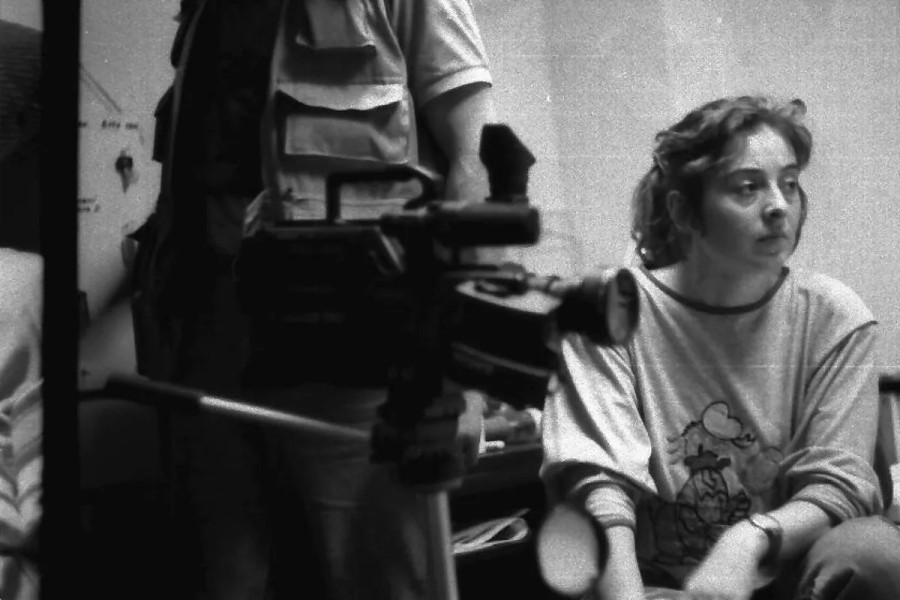
"At first, even I did not believe him", the war reporter recalls how a survivor’s account, after months of legal verification, reached global headlines and helped establish a new standard for identifying genocide victims.
As victims of the Srebrenica genocide are being buried in Potocari, the anniversary also recalls the role of journalists who, under extreme conditions and with limited access to information, worked to bring the truth of the atrocities to the world.
Among them was Sarajevo-born, Associated Press (AP) war correspondent Aida Cerkez, whose reporting helped reveal the scale of the crimes committed after the fall of the UN-protected enclave in July 1995.
In an interview with N1, Cerkez recalled how the testimony of a survivor of a mass execution reached international headlines after months of legal verification.
When AP sent her to Tuzla in July 1995 to search for survivors, the fate of thousands of missing men from Srebrenica was still unknown. The international community had not yet accepted that systematic executions had taken place.
"At that time, there were only four or five satellite phones, and it took five hours to position them towards the satellite in order to make a call. When everything happened with Srebrenica, nobody initially believed that these people had been systematically killed," Cerkez said.
"From today’s perspective, it sounds strange, but at the time people believed it was classic ethnic cleansing, that you force people out and give them five minutes to leave with a plastic bag. Systematic executions were not known about. Everyone believed those men were somewhere being held in mines near Arandjelovac", she added.
After searching for survivors, Cerkez found a man who had survived a mass execution and who later became a protected witness before the International Criminal Tribunal for the former Yugoslavia.
His account was so horrific that even Cerkez initially questioned it.
"I recorded eight hours of an interview with him outside Tuzla. When I returned, I called the agency and said: ‘I have the material, but I don’t believe him. I think this man is so traumatised that he is telling me stories from the Second World War.'"
The testimony then went through months of detailed verification by AP’s editors and lawyers.
"They sent me back from Sarajevo to Tuzla six or seven times. Under shelling, that meant two days of travel in one direction, so I could answer hundreds of questions they had, not my editors, but the lawyers of Associated Press," Cerkez recalled.
One of the key details involved the number of prisoners held inside a school hall before they were taken away and executed.
"The witness said there were exactly 278 people in the hall. The lawyers found that suspicious and asked how he could know that if nobody had counted them," she said.
The survivor explained that he calculated the number based on the size of the room and how densely people were packed inside.
"When they asked how he knew the exact dimensions of the hall, I went back and asked him. He gave me the crucial answer that confirmed the whole story. He said: ‘I am a bricklayer.'"
After the legal review, the story was published worldwide on 5 October 1995.
Srebrenica and the DNA revolution
Cerkez says Srebrenica also became a turning point in how the world identifies victims of mass crimes.
"Bosnia and Herzegovina was the first country in the world where, thanks to the International Commission on Missing Persons (ICMP), every victim has an exact name, surname and circumstances of death."
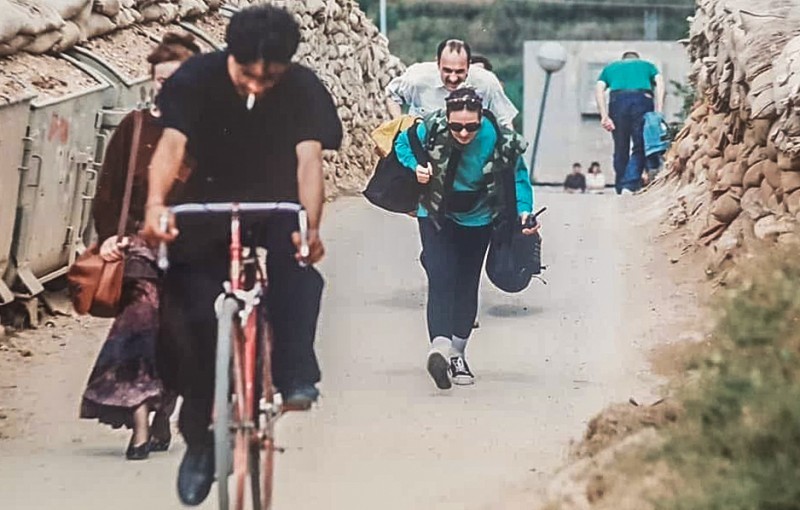
She said DNA identification helped end decades of disputes and manipulation over the numbers of victims.
"The first ICMP machines for rotating test tubes that I personally saw looked like the machines used to rotate chickens at a market, until the international community realised that mass DNA analysis could put an end to speculation."
"That global standard, which is today used from Iraq to Ukraine, was born here. There is no longer room for manipulating numbers in order to justify future crimes."
Looking at the future of remembrance, Cerkez stressed that education and art will play a crucial role once there are no more victims left to bury.
"Today, ten victims are being buried. One day there will be no more burials, but that does not mean commemorations and education should stop."
"Everything that generations do not know, they will repeat."
For Cerkez, films and art have a unique role in preserving historical memory.
"A book you write will be read by 50,000 people, but a film you make will be watched by five million. In the end, films are the ones that remain to preserve the truth."
Kakvo je tvoje mišljenje o ovome?
Učestvuj u diskusiji ili pročitaj komentare


Kakvo je tvoje mišljenje o ovome?
Učestvuj u diskusiji ili pročitaj komentare